Blog Archives
International Day Against Homophobia 2013
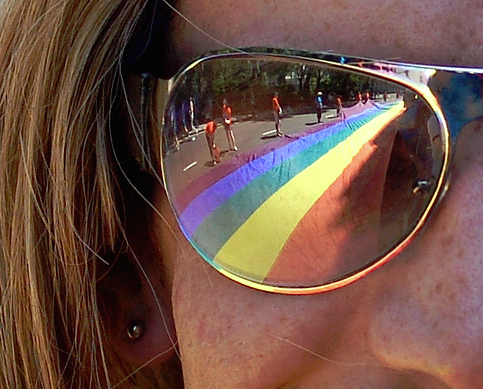
Photo by LewishamDreamer
It’s FRIDAY!
Today, May 17th 2013, marks the 9th annual International Day Against Homophobia (IDAHO) ((you may also have seen it written as IDAHOBIT (International Day Against Homophobia, Biphobia and Transphobia)).
IDAHO is a day where we should reflect on gay rights (or the lack there of) both home and abroad – something some of us can be guilty of forgetting about sometimes.
We have issues here the UK that’s for sure, we’re still fighting for the right to marry the person we love (the ball is rolling, but the fight is far from over) and 5 to 7 percent of the LGBT people surveyed in the UK say that homophobia is very widespread. But things are getting better all the time – one day we will have marriage equality, we will be seen as equals next to our straight brothers and sisters.
But our problems here in the UK pale in comparison to those abroad. In Uganda politicians are falling over themselves to progress their ‘Kill The Gays Bill’ which would, as the name suggests, enforce death penalties on people engaging in ‘same-sex relations’ and other penalties for those supporting these “deviants”.
Meanwhile in Russia the Moscow authorities have denied a request to carry out a ‘gay pride parade’ in the city. This apparently falls under “compliance with ethics” as to allow such an event would not be patriotic, it seems “Moscow does not need such events”.
We may live in 2013, we may have equal marriage in an ever growing number of countries including several US states, we may have cars that drive themselves and space tourism – but apparently it’s not alright for everyone to be who they want to be. That’s so sad.
This IDAHO please spare a thought for couples all over the world who’re having to conduct their relationship in secret for fear of persecution or even death, then get angry – together we can make a change. If you are one of those people, stay strong, hold out – don’t let people tell you who you can and cannot be – you have every right
Official IDAHO website: http://www.idahomophobia.org/
Kindest Regards,
Tom
UKPositiveLad
World AIDS Day 2012
Hello Hello,
Today, Saturday 1st December 2012, is the 24th World Aids Day.
We’ve come a long way in thirty-four years. Back then a HIV diagnosis was more often than not followed with an AIDS diagnosis and a high likelihood of death. Now in 2012 HIV is a manageable condition, with early diagnosis and modern treatment regimens we can expect to live as long as any of our HIV- contemporaries, some say even longer with the constant health monitoring and care we receive.
But HIV still has no cure, it’s a life long condition – one that is not easy to live with, either physically or emotionally. The HIV related complications are numerous, the risk of certain cancers is dramatically higher and that’s not even mentioning the stigma and discrimination HIV+ people can still face today.
Whilst things may have improved dramatically for people living with HIV in the developed world the same thing can’t be said for others around the world. Deaths from HIV/AIDS in Africa are still unconscionably high. We need to work on providing support, education, cheaper medication and contraception. If we’re going to fight this epidemic we need to hit it – HARD.
Closer to home, I hear a lot of people asking “What does World AIDS Day have to do with me?”, and until I was diagnosed I’m ashamed to admit that I was one of those people. We’re bombarded with so many “international days” it’s hard to keep track of what’s happening when and whether it’s worth getting involved. In November alone there are TWENTY-FOUR “international days” including:
- World Planning Day
- World Kindness Day
- World Pneumonia Day
- World Hello Day
- World Fisheries Day
But World AIDS Day is one of the biggies. It happens in most countries around the world with the backing of the United Nations and the World Health Organisation. It’s a time to reflect on those we’ve lost to the disease internationally over the few decades, time to think about how we can help work towards a HIV free generation, and time to think about our own behavior.
Leading up to this year’s World AIDS Day there was the first UK wide ‘HIV Testing Week’ – an initiative to get people up and down the country regardless of gender, age, sexuality or ethnicity to go and get tested. Something I wrote about the other day ‘Read more…’
But don’t let the good work stop there, if you didn’t get chance to go get tested this week – go next week! Once you’ve done it put an appointment in your diary to go again in six months, the short time it takes to get tested is a small price to pay for peace of mind and being in control of your own health, and the health of those you sleep with.
I’m going to be spending today wandering around Central London with the Terrence Higgins Trust rattling buckets and collecting money to help continue the fight against HIV. If you see us please fling some change our way, and if you don’t perhaps you could go online and donate something?
Whatever you do this World AIDS Day do it with kindness, love and thought.
Love,
Sam
UKPositiveLad
Footnote: You can read World AIDS Day interviews with me in today’s The Times and at SoSoGay, as well as my 2,000 world feature on World AIDS Day in this month’s issue of Attitude Magazine!
Your HIV questions answered by DrEd.
Currently 100,000 people are estimated to be living with HIV in the UK, but an estimated 25% of those are undiagnosed.
That’s 25,000 people who have HIV and don’t know about it! As we come to the end of HIV Testing Week in the UK and approach World AIDS Day 2012 I put some of your questions about getting tested and HIV to Dr Sebastian Winckler from DrEd.
1. Why is it so important to get tested for HIV?
Early testing is vital both for you, and for the people you’re sleeping with.
If you’ve got HIV and you’re getting treatment you can expect to live 40 years longer than someone who isn’t receiving treatment.
If you’re taking antiretroviral medication, you become less infectious to other people. Being aware of your status means you can start putting certain measure in place (such as safe sex)
to prevent transmission, as well as looking after your own health.
2. What stops some people from getting tested?
There are a lots of reasons why people avoid HIV tests, but usually it’s down to:
- The stigma surrounding HIV and AIDs: Despite advancements in treatment, in some communities there is still stigma about being HIV+, so many people feel embarrassed about getting tested. Remember, there is no shame in being HIV+.
- The inconvenience of testing: If you work during the day, it can be hard work finding the time to go.
- Fear: Some people are simply scared off getting a result they don’t want to hear. Remember though, it’s better to get tested and treated rather than making yourself, or others, ill.
3. Where can I get tested?
HIV tests are available free and confidentially from:
- Sexual health (GUM) clinics
- HIV testing centres (Terrence Higgins Trust Fastest centres, for example)
- LGBT Centres
- GP’s and family doctors
- HIV tests are available to buy from:
- Private clinics
- Online doctors services
4. I haven’t had any symptoms, so I probably don’t have HIV, right?
Wrong. Most people will experience a short, flu-like illness about 2- 6 weeks after being infected. This is your immune system putting up an initial fight against the virus and can last for up to a month. But, this can be easily mistaken for the flu and 20% of people don’t experience any symptoms at all.
After this has gone away, you are unlikely to notice any other symptoms for a long period of time. So the only way of knowing for sure is getting yourself tested.
5. Can a test pick up any HIV infection, regardless of when I’ve caught it?
No. A certain amount of genetic material needs to build up in your system before it can be accurately detected by a test. The time taken for this to happen is called the ‘window period’ and this is different for every test.
- The standard antibody (Ab) test will pick up HIV if you caught it more than 3 months ago.
- The combined antibody/ antigen test (4th Generation test) will pick up HIV if you caught it more than 6 weeks ago.
- The HIV PCR test will pick up HIV if you caught it more than 7-10 days ago.
In most cases, you will be given either the standard antibody or combined test. If you test negative for these, it doesn’t necessarily mean that you are HIV negative, because you might have been infected within the last 3 months (or 6 weeks). You are therefore advised to take a second test 3 months later for the all clear.
If you want a faster result you can pay for a PCR test. But these are only offered at some clinics and may cost up to £250.
6. I think I’ve caught HIV within the last few days, what do I do?
If you’re worried that you’ve contracted HIV very recently, as in, within the past 72 hours (3 days) then you should go to your local GUM clinic or A&E department and request emergency PEP treatment.
7. I’m afraid to get tested because I don’t like needles
HIV tests don’t have to be done via needle or syringe, some clinics use ‘Fastest’ Rapid Testing which simply takes a prick on the end of your finger. Other clinics may take oral swabs instead, this method is considered less effective than a blood test however, so some clinics won’t offer it.
8. How long do I have to wait for my results?
That depends on the clinic you go to. Most will contact you with your result (or ask you to come back in for it) within 3-5 days. If you take a rapid test your result will be ready within the hour. Some clinics can take up to 2 weeks however, don’t be afraid to ask when you should expect the results.
9. What happens if I test positive?
First off, a positive result doesn’t always mean you’re HIV+. There is a small margin of error, so all positive results must be followed up by a confirmation test.
If you do test positive for that, then the doctor or nurse who informs you of your result will set up a meeting with a specialist who can assess the stage of your infection and talk to you about relevant treatment options. You’ll be put in touch with local HIV support groups who can help you cope emotionally, and make you realise that a positive result is not the end.
Thirty years on and HIV is still a problem in the UK, but it is no longer a death sentence. There is help out there and the earlier you get tested, the better your prospects. Whatever you do, make sure you get tested this HIV Testing Week.
Some charities that can help:

December Attitude Magazine OUT NOW

Good afternoon ladies and gentlemen,
Just a quick post to let you know that the December issue of Attitude Magazine is OUT NOW!
This month there’s not one but TWO pieces from me in the mag, as well as my monthly column, in which I have a good old rant, you’ll find a World AIDS Day feature from yours truly about living with HIV and what World AIDS Day means to me in 2012.
As you’d expect from a December issue there’s plenty on Christmas, parties, shopping and an interview with the very lovely John Whaite of Great British Bake Off Fame (as featured on the front cover).
So what’re you waiting for? Pop down the shops and grab a copy, or if you’ve got an iPad why not download the funky interactive iPad Edition?
Season’s Greetings!
Sam
UKPostiveLad
What ‘World Suicide Prevention Day’ means to me
Today, September 10th 2012, is World Suicide Prevention Day.
Suicide is not something people find easy to discuss, this isn’t helped that by the fact that it is still considered a criminal act in many countries (but not the UK since 1961), or that many religions consider it a “sin” – all of this keeps suicide a taboo subject, one that people tend to shy away from given the chance.
But talking is what we need to do. In 2010 in the UK 5,608 people committed suicide (4,321 men & 1,377 women). A recent study by the University of Manchester showed that only 27% of people who committed suicide in the UK between 2000 and 2010 had spoken to a mental health professional. That means 73% (4093 people) didn’t feel they could seek professional assistance with how they were feeling.
There’s a tendency these days to shrug off suicide, and even term it a selfish act, and on the face of things I can see how people reach that conclusion, but you need to step into the shoes of the person in question. How bad had things got in their life that they felt that their only remaining course of action was to take their own lives? That they had no-one to talk to? No other form of resolution?
A few months ago I wrote a blog post, ‘The Night I Almost Died’, about how the selfish and callous actions of someone I had trusted left me feeling that there was no way out but to go out on a cold night and jump off a bridge. My reputation, my life, my self worth and confidence were all in tatters due to one vile and baseless rumour, something I thought I’d never live down. I probably wouldn’t be here today if it weren’t for my friend Ben, who spoke to me in the middle of the night, who calmed me down when I was shaking and in tears, or without the help of the counsellors at MyHIV.org.uk who helped me rebuild my confidence.
So today on Suicide Awareness Day take a moment to think of your friends, your colleagues, your family – is there anyone who’s feeling down? Someone who’s more anxious or withdrawn than normal? Why not give them a call, or arrange a coffee and ask how they’re doing. From personal experience I can tell you that there’s nothing more reassuring than hearing a friendly voice and seeing a familiar face when you’re at your lowest.
If you’re the one feeling low, why not take the initiative and call a friend up yourself, and if you really feel you can’t talk to your friends about what’s going on there are organisations out there that can help you. If it’s HIV related try the THT Direct helpline on 0808 802 1221, or if it’s more general the lovely people at Samaritans will always be there to listen on: 08457 90 90 90.
Make time for those around you this World Suicide Prevention Day.
Massive cuddles all round,
Sam
UKPositiveLad
My First World AIDS Day
In a couple of hours it will be December 1st 2011. World AIDS Day. My FIRST World AIDS Day.
Well, that’s not entirely true now is it? I’ve been on this planet for 26 years, and the first ever World AIDS Day was held in 1987 – which means this is the 24th World AIDS Day, but what I mean to say is this is the first time I’ve ever paid attention, the first time I’ve felt it was ever relevant to me.
You see in July 2011, only 4 and a bit months ago I found out I was HIV+. Something I’d never even dreamed would happen to me. So the last 8 World AIDS Days of my adulthood have somewhat passed me by, just another one of those irrelevant international (speak like a pirate, wear a moustache, typhoid awareness) days. But here I am, 26 years of age and HIV+ and World AIDS Day has a whole new meaning to me.
I’ve spent a lot of time being brutally frank and honest with myself lately, due to both my own feelings and the reactions of other around me (both welcome and unwelcome) and let me assure you that I’m under no illusion that I’ve no-one to blame but myself for being in this predicament. I was never the most careful person when it came to sex (how times have changed), but nor was I particularly reckless – I guess I’d call myself unlucky.
One thing that has become abundantly apparent to me in this process however is how little that the general public (even high risk groups such as gay men) know about HIV, and I sadly include myself in that until recently. This concerns me in two different ways:
- People don’t know/understand the risks. People engage in risky sexual behaviour with perfect strangers with only their word as to their HIV status. Even if the person fully believes that they are indeed HIV negative this is only as good as their last test (which may have been quite some time ago). The only person who truly knows their HIV status is someone who is HIV+.
- The lack of understanding about how the virus works, how it’s transferred and what it is to live with HIV feeds a damaging stigma surrounding HIV and those living with it. I’ve nearly been driven as far as suicide in recent weeks by the extreme negative reactions of some of those around me. I feel like I’m always looking over my shoulder for the next bad reaction.
There’s a lot of work to be done, an overwhelming amount in fact. There needs to be more information in schools, colleges, universities, in bars and in clubs, more discussion on television and wider reaching campaigns on the net. It’s obvious to me that this information needs to be of a higher quality too, targeted for the groups it’s intended to reach, when I was diagnosed I was passed an information pack, the two case studies were of a 30yo married straight man, and a 50yo lesbian – neither of which I could remotely relate to.
It’s also important that these campaigns and informative materials do not preach, people will always engage in unprotected sex as long as the Earth keeps turning, what we need to do is educate people of the risks to enable them to make an informed decision about when they feel comfortable and confident engaging in unprotected sex with a partner as well as feeling confident and secure in saying “no. But if you preach you will turn people off your message – it’s as simple as that.
So what we need are information packs and campaigns that target specific groups with information relevant to them in a manner that doesn’t patronise, preach or scare. Only then will we reduce the fear and uncertainty around HIV and with it the stigma.
I’m going to use my first World AIDS Day to spread this message, what are you going to do?
Sam
@UKPositiveLad